
The Strangest Races in F1 History
F1 has produced several races where bizarre circumstances have impacted the leader and the entire field.
Beyond the Lines · Oct 26, 2026 · 4 min readFormula 1 usually rewards a driver’s ability to deliver under pressure. An elite car and a solid team with the best race strategy are key too. F1 betting fans don’t make it much more complicated than that.
Sometimes there’s a problem though. Things go off-script. The fastest car hits dirty air for too long, the leader spins, or weather changes mid-race. On some occasions, the rules and regulations come into play and somehow manage to annoy everybody.
The strangest F1 races offer more than bad-beat stories. Reliability and safety decisions can take the race completely out of the drivers’ hands, whether you’re Alain Prost, Lewis Hamilton or Max Verstappen. Human behavior can always take control of an event. And no bets are guaranteed till you see the checkered flag.
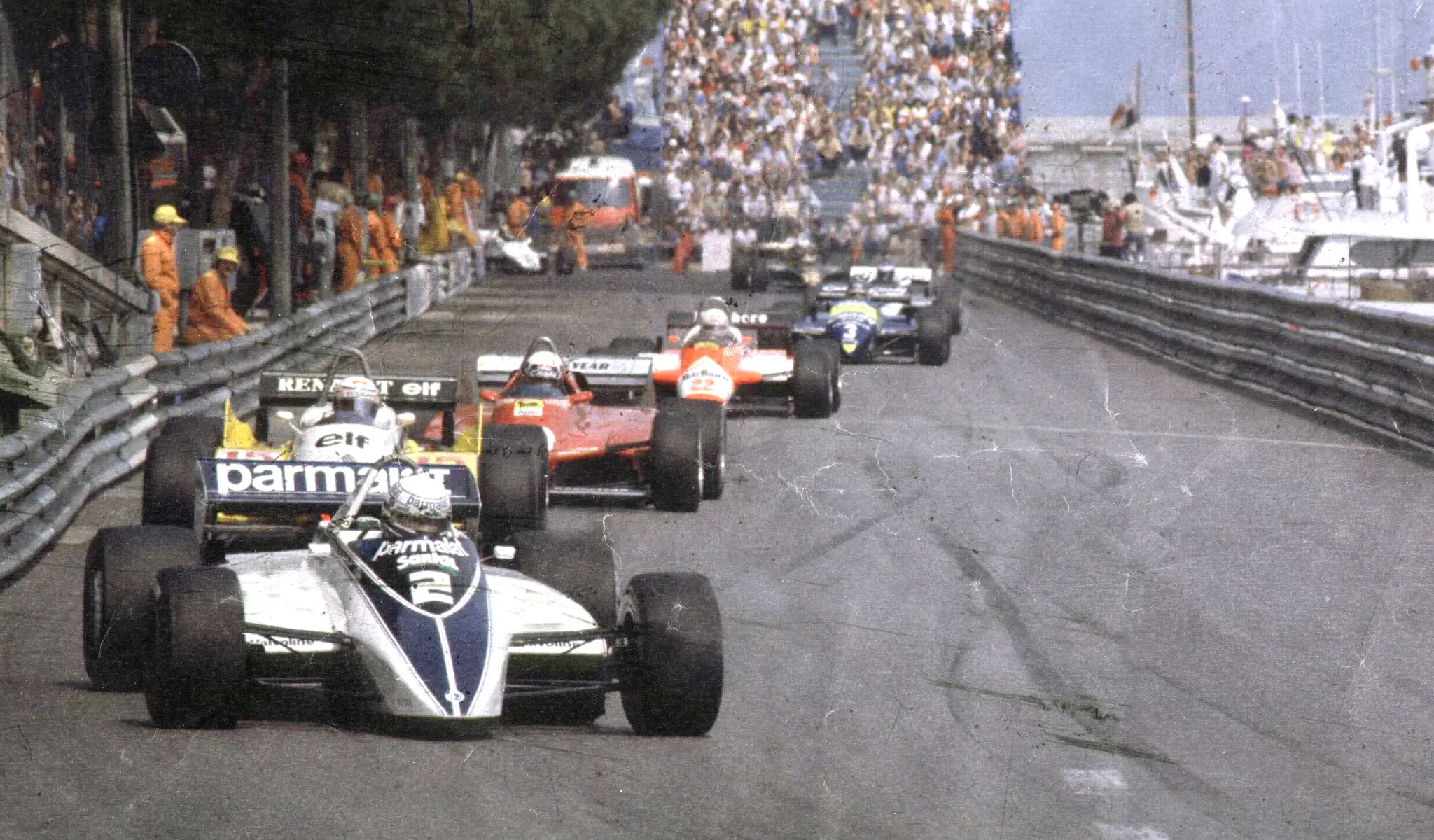
Monaco 1982: The Race Nobody Could Finish Off
The closing laps of the 1982 Monaco Grand Prix made a normally boring race into a wild series of mistakes and failures.
Monaco is famous for its consistency. Passing is extremely tough to do. The driver in P1 has a bigger edge than any other P1 start elsewhere on the calendar.
As rain arrived later in the race, close to Lap 66, it changed everything. Alain Prost started P4 and took the top spot by Lap 15. It seemed settled by Lap 60, with just 16 to go and the best driver in the field leading.
Mistakes and mechanical problems took over along with the rain. Over the final three laps, the lead changed hands four times. Riccardo Patrese eventually collected his first F1 victory, although his own late spin should have ended his chances.
Patrese spun approaching the famous Loews hairpin after he hit oil dropped by Derek Daly’s Williams. Patrese’s Brabham (these team names sound ancient, we know) ended up facing uphill. He looked stranded. Getting it rolling downhill allowed him to restart, but by then Didier Pironi had moved ahead. In a normal race, that would have been it. Pironi was probably popping champagne bottles in his mind already. This was not a normal race.
Pironi’s Ferrari suddenly stopped in the tunnel on Lap 76, the final lap. Andrea de Cesaris also ran out of fuel just moments earlier. Pironi was P1 at the time, de Cesaris was P2. Daly’s damaged Williams suffered a gearbox failure the lap before, which is what caused the oil patch.
Patrese, who had just a minute earlier spun around and out of it, emerged from the confusion to win.
Monaco looks great on TV but often the race doesn’t live up to the hype. This one did.
F1 betting markets can’t really take a ton of lessons here. Even the sharpest live bettor would have been cooked on the last two laps. Monaco 1982’s biggest lesson could be that you can’t ever call a late advantage completely secure.
United States 2005 GP: Six Starters?
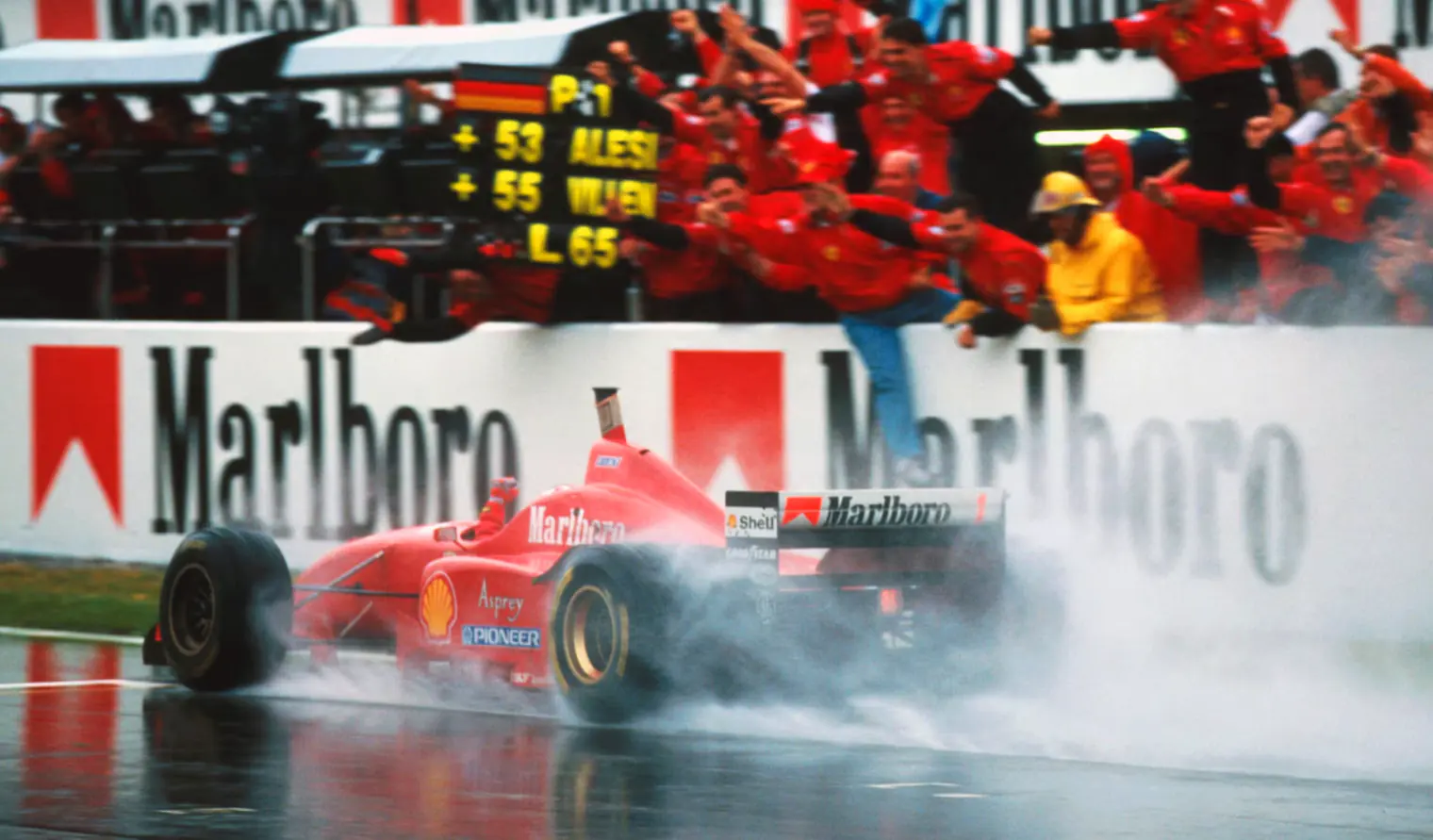
At Indianapolis in 2005, the strange part happened before the race even started. It was one of the occasional Formula 1 races where the win/loss difference happened because of decisions made off the track. All 20 cars completed the formation lap, but the 14 cars running Michelin tires then returned to the pits.
Only the six Bridgestone-equipped cars took the start: two Ferraris, two Jordans and two Minardis.
The problem was safety, not some kind of mass driver or team protest. The safety issue began with Michelin themselves, which had underestimated the demands of Indianapolis’s banked final corner. Turn 13 combined high speed, aerodynamic downforce and banking. That all put unusual loads through the tires.
Michelin also brought no suitable backup tire solution. After Ralf Schumacher’s practice crash exposed the danger, Michelin could not guarantee its tires would survive race conditions.
Replacement tires didn’t resolve the concern. A proposed temporary chicane offered a possible workaround, but officials rejected that solution: there was no time to test it out properly.
All boring stuff in the overall exciting history of F1 and not a good look for a sport that had trouble getting any kind of traction (yeah, pun intended) in the States. F1 had only been back in the US for five years since they left from 1992-1999. This was a brutal move that didn’t help at all. Spectators at the 2005 race booed, some threw bottles, and thousands headed for the exits.
Anyway, they went ahead with six cars as it was. Michael Schumacher won the race ahead of Ferrari teammate Rubens Barrichello. Jordan rookie Tiago Monteiro finished third. Schumacher’s victory was Ferrari’s only win of the season.
More of a caution flag for F1 bettors, although you’d have to think this won’t ever happen again. A car appearing for the formation lap doesn’t guarantee participation in the race.
Belgium 2021: Free Points
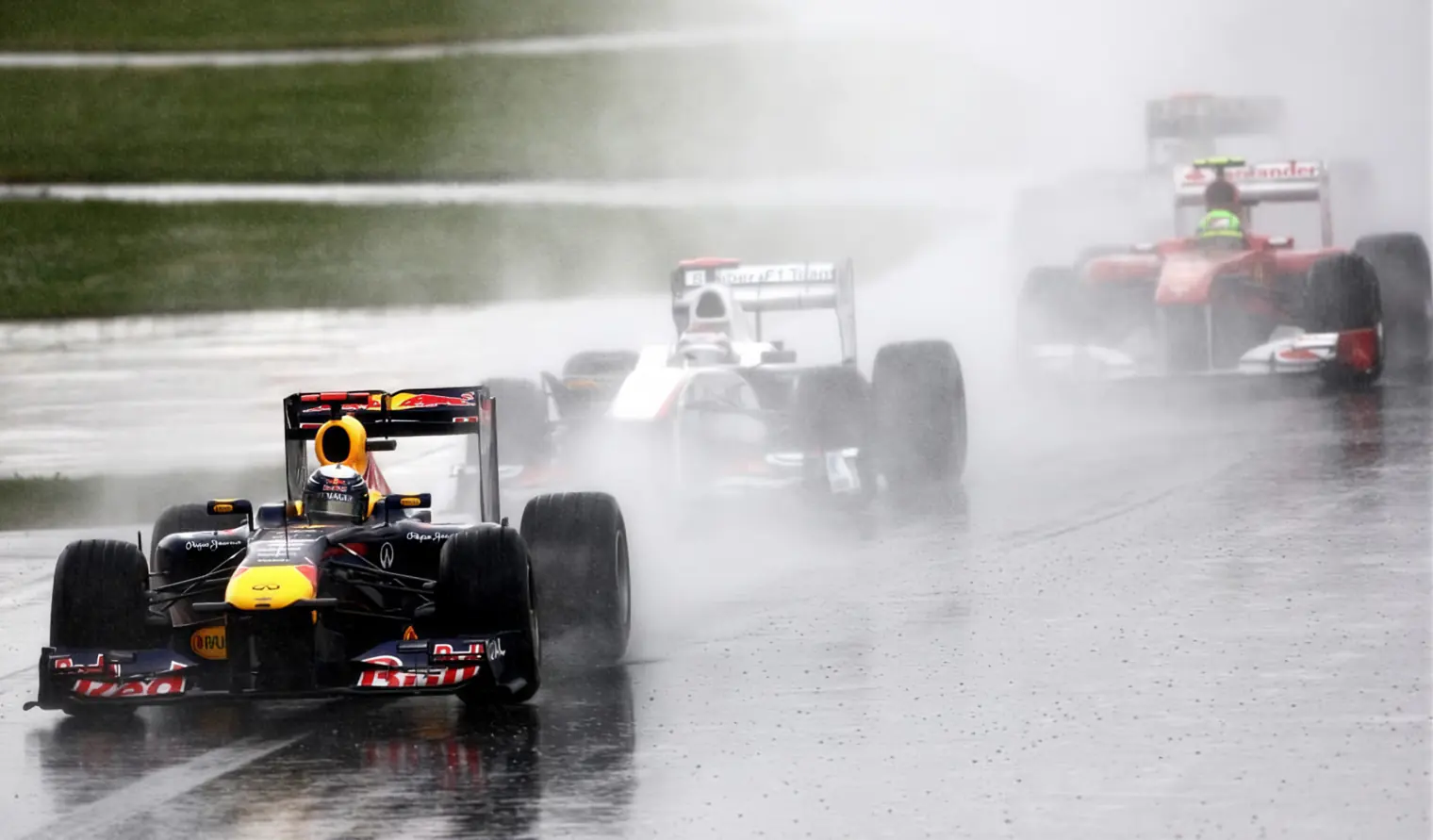
The 2021 Belgian Grand Prix pushed the definition of a completed F1 race to breaking point.
Intense rain and poor visibility at Spa-Francorchamps wouldn’t let up. Cars circulated behind the safety car, but there was no green-flag racing the entire day. Max Verstappen was still declared the winner, George Russell finished second, and Lewis Hamilton took third.
The official classification recorded just one lap. Half points were awarded because, under the applicable F1 rulebook, the leader had crossed the control line three times. The classification procedure then counted the result back to the end of lap one. Verstappen received basically a free 12.5 points and Russell got 9. For betting fans, it all came down to each book’s settlement rules.